
(only have a minute? jump to quick tips)
Generations of my family have taught me to be thrifty. Much of my family is Scottish, who are thrifty by nature. And much of many of my family members were farmers, also a thrifty bunch, by their nature. Being thrifty and going green often go hand-in-hand. Reducing the number of new products you buy, reusing the items you already have on hand and repurposing things you already have on hand or can find at a thrift store – all this helps your wallet and the planet! And as many of us work to declutter our lives, selling the stuff I no longer need continues the pattern of helping my wallet and helping the planet.
Some Buying Tips (in no particular order):
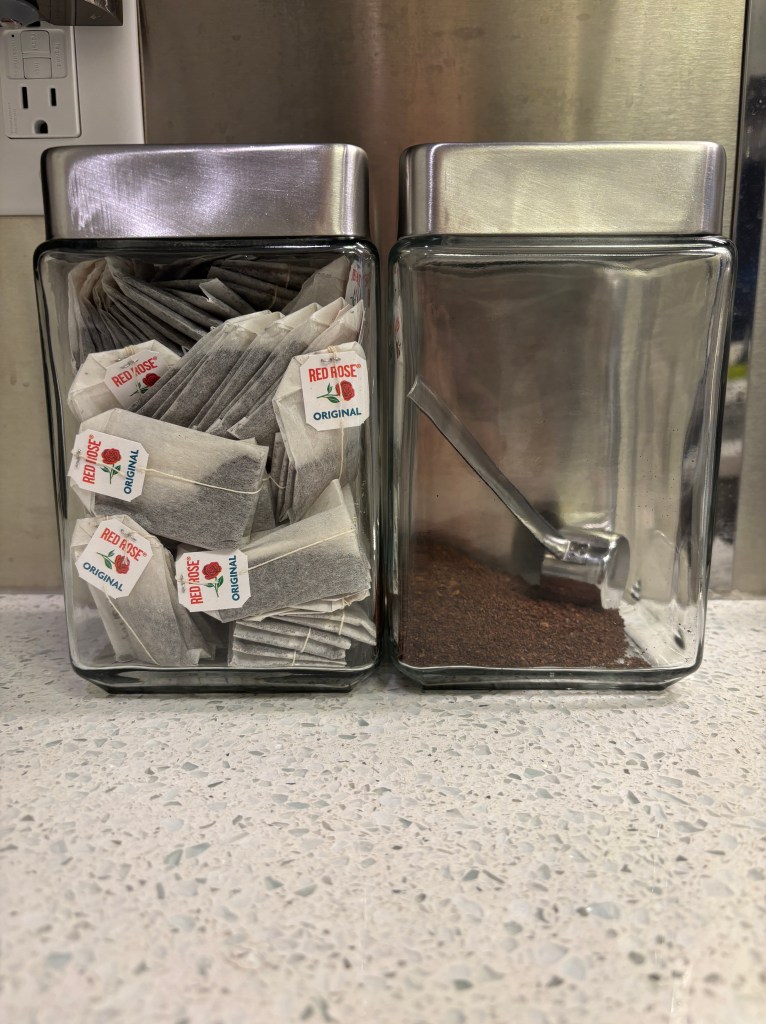
- Be patient. For example, after re-arranging my kitchen to create a little coffee/tea area, I realized I needed a couple canisters to store the coffee/tea. I could’ve dropped everything and gone to a big box store or ordered something online, but I recognized it wasn’t an “emergency” to get these right away. I just kept an eye out at my local thrift stores and two weeks later, found exactly what I needed – a pair of Anchor Hocking canisters that would’ve cost $43 for the set if I bought them new. Instead, these were priced at $3.09 before my 25% senior discount.
- Ask about a senior discount. Goodwill offers a 25% senior discount every Tuesday on full-priced items.
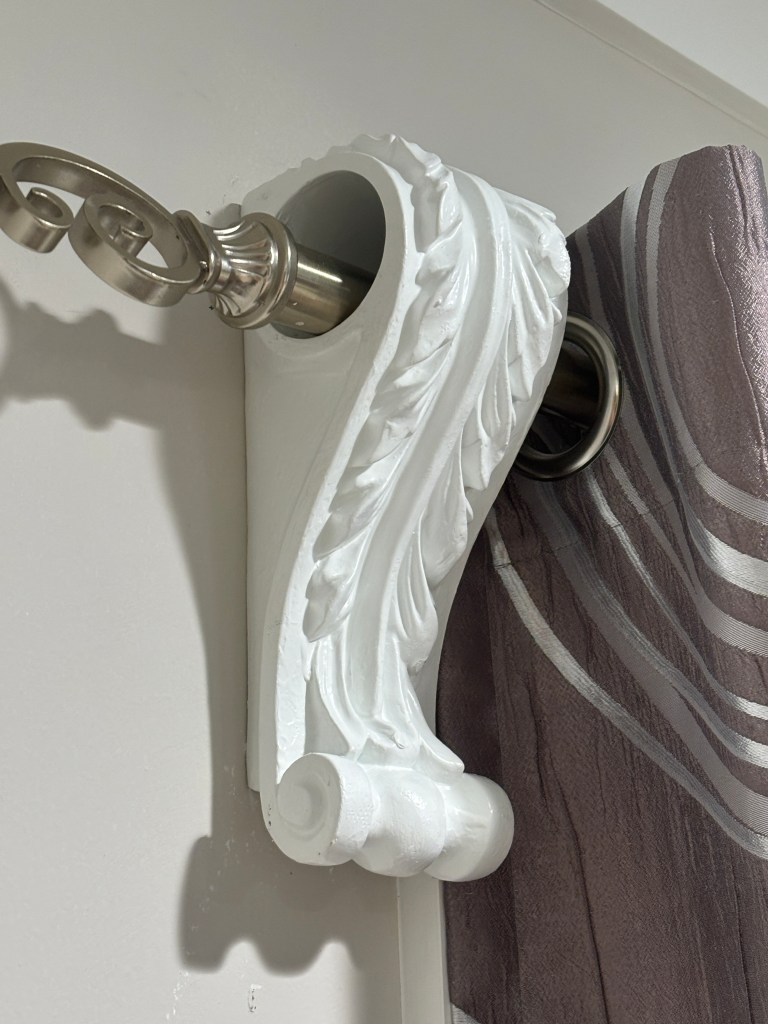
- Google lens is your friend. Click away while you’re in the store for two reasons: 1) You might find out there’s an incredible deal staring you in the face – like a pair of Royal Doulton champagne flutes valued at about $120 marked at the thrift store for $2 each. 2) You might also find out the opposite – sometimes the people doing the pricing at thrift stores don’t know what something is or how to price it, so they guess. And sometimes, they guess way WAY to high. Google lensing it will allow you to politely show a manager how “off” the price is, and ask if they’re willing to change the price for you. (I can show you some plaster curtain rod holders I did this with.)
- Careful when purchasing glassware. Most of the glasses in my house are purchased from thrift/consignment stores, but it took a lot of trial & error and wasted money before I figured out how to be careful. A lot of thrift glassware you find is cloudy. And you might be tempted to buy it anyway, thinking you can wash it at home and it will all be ok. It probably won’t. Much of the time, that clouding is impossible to remove. And I’ve tried it all – every tip on the internet – vinegar, lemon juice, ammonia, baking soda, Barkeeper’s Friend. Nothing ever works. But, does that mean you should never even look at the cloudy glasses in the thrift store? Not necessarily. I just see if the clouding rubs off easily in the store and then hold it up to the light. If it looks clean, cool. I go ahead and buy it. If it doesn’t, I just don’t even bother trying to buy it anymore. In my experience, if it doesn’t clean up while I’m in the store, it’s not going to get any clearer when I am at home. Another important thing: ALWAYS check the rims for chips. I always run my finger carefully around the rim of each individual glass/mug I’m planning to buy.
- The thing you’re buying can serve multiple purposes – (draft dodgers, drop clothes, etc)

lori’s thrift store finds!
Some Selling Tips (in no particular order):
- Figure out what your main objective for each item is…
- Get rid of it?
- Make as much money as possible?
- Somewhere in between the two choices above?
- Take LOTS of pictures – and from multiple angles. Make sure you clearly show any flaws too. If it’s new, take pics of the tags. Also take pics of the labels showing the brand and washing instructions, if it’s clothing. Try to make a nice background – stark white helps sell clothes and accessories. A well-staged piece of furniture sells much better than a messy look. It sends a message that you’ve taken good care of the piece.
- Be thorough and honest in your descriptions. If something is wrong with it, explain what it is and how bad the flaw is.
- If you can see multiple uses for an item, share those ideas so you can open your pool to more potential buyers. For example, a punch bowl doesn’t just have to be a punch bowl. It can also used for salad, chips or even floating candles. A chemise doesn’t just have to be a sexy nightgown. It can also be used as a slip.
- Don’t forget the measurements! Especially if your selling furniture and clothing. Few people are going to take the time to message you, asking about the exact sizing of your desk or cabinet. How are they supposed to know whether it will fit in their home or their car? Same with clothing – one manufacturer’s size small may be another manufacturer’s size large! So get out your tape measure and measure the chest, length, inseam, waist… all of it.
- BE SAFE! Unfortunately, there are a lot of people looking to scam people on Facebook, Craigslist, Nextdoor. And every once in a while, there will be a creepy character looking to do actual physical harm. There is lots of info online on how to stay safe on these sites. Poshmark is much safer, because all payments go directly through them and everything is mailed. However, still watch out for your physical safety and the security of your home, because many people announce on Poshmark when they are on vacation.
Quick tips:
FOR BUYING PRE-OWNED STUFF
- Be patient (you’ll get a better deal)
- Ask about a senior discount (even if you don’t feel that senior)
- Use Google Lens (it will give you great context!)
- Don’t buy murky glassware (it won’t come out)
- Think of creative uses for the item (but if you won’t use it, skip it!)
FOR SELLING YOUR PRE-OWNED STUFF
- When pricing, pinpoint your objective (make money? declutter?)
- Post lots of pictures (buyers want to see every angle and then some)
- Be thorough and honest in descriptions
- If your item could have multiple uses, list those as selling points
- Post measurements, not just sizes
- Be safe – use common sense and don’t reveal too much to strangers
 the green gals podcast
Leave a comment