

(only have a minute? jump to final thoughts)
We do our best to recycle what we can. But why not just avoid buying potential landfill fodder in the first place? Enter the mighty eco-swap.
Basically, it means trading an un-environmentally friendly habit or product for a more sustainable one. Bringing washable to-go containers to a restaurant, using toothpaste tablets instead of tubes, dishwashing bars instead of liquids, that sort of thing. Every little bit counts toward boosting your eco-warrior cred.
PACKAGING = BAD
The packaging on the products we buy takes up a surprising amount of space in U.S. landfills – it makes up more than a third of all plastic that is produced, and 85% of it ends up in landfills. We absolutely have the power to eliminate a lot of that waste. (For more shocking data supporting the move to refills, jump to Facts & Figures below.)
GROVE IS FINE, BUT…
Some good options have been available online for a long time – Grove, Amazon and other sites sell a nice variety of cleaning concentrates, shampoo bars and other eco-friendly products. But they still require shipping and some amount of packaging. If you’re looking for a gold star in eco-swaps, seek out a refill store.
THE JOY OF REFILL SHOPPING
ATLO in Atlanta, for example, offers a refill station where you can browse a wall full of products, from laundry detergent to body lotion. The selection is always changing, but at present there are over 20 products to choose from – all drawn from bulk bins and buckets.

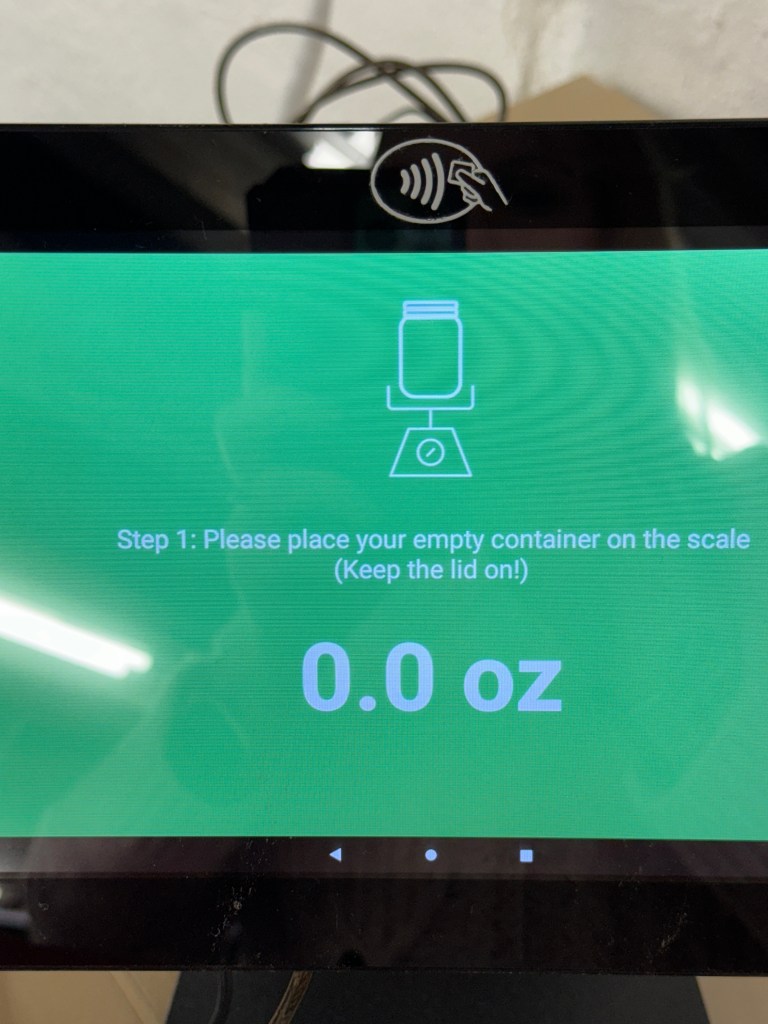
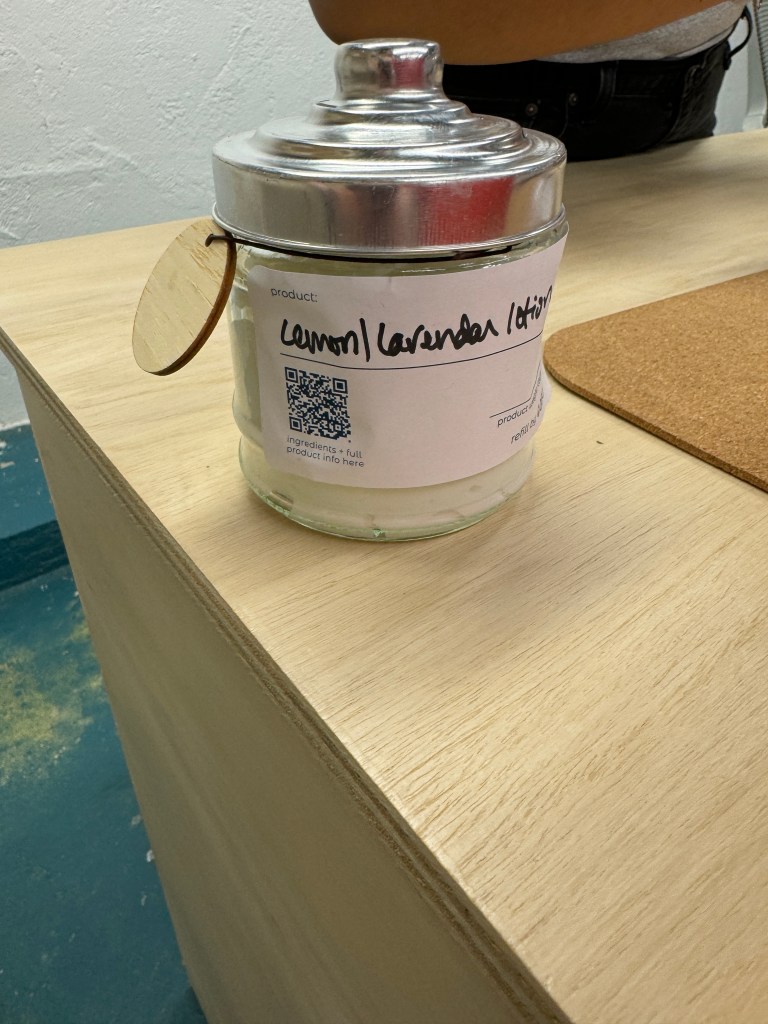
It works like this: You bring your own containers and fill them with as much or as little product as you like. All items are priced are by weight, so you tare your container on a scale first to calculate the weight to be subtracted at the register. No containers? No problem. ATLO sells glass jars of various sizes and even offers a “jar library” of free containers. It’s like a take-a-penny, leave-a-penny system providing customers the option to donate or adopt containers to fill.


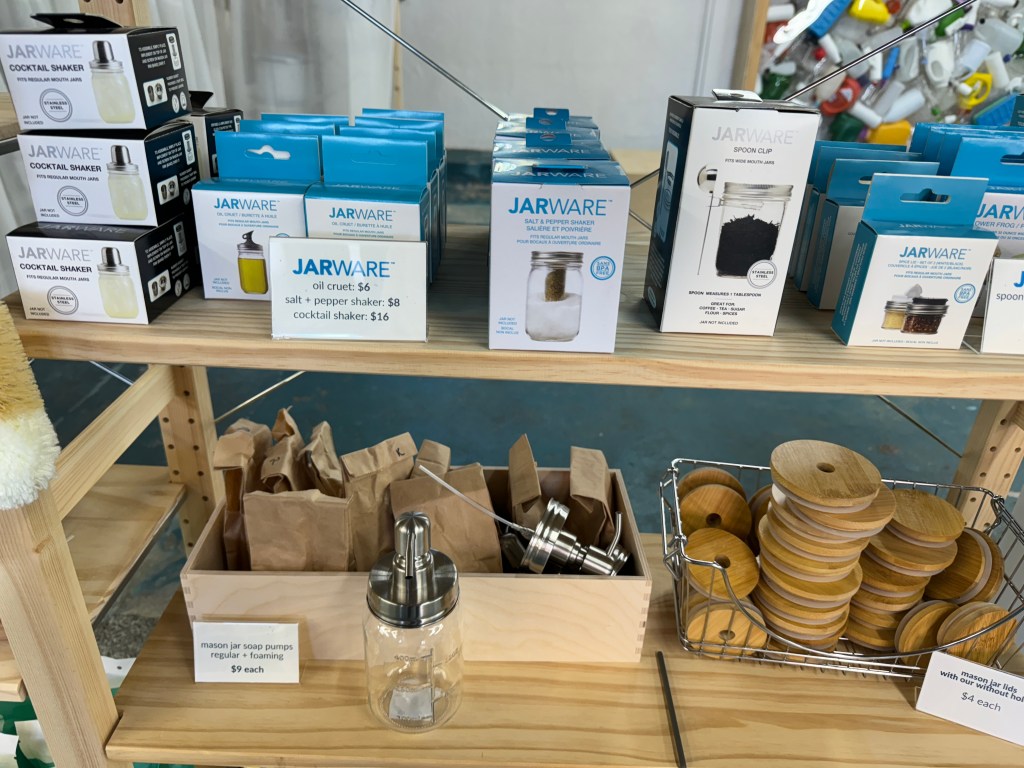

On its non-refill aisles, ATLO offers other eco-friendly household products like glass hand-soap pumps and reusable dryer balls.
All of this equals one major swappy change… when you shop, you are at zero risk of amassing new trash.
THE DOWNSIDE
You may not find everything you need. For example, I use shower oil and was hoping to find an alternative to the plastic Neutrogena bottles I buy, but ATLO did not have anything comparable. I am doing some soul-searching to see if I can make do with my homemade lotion after showers instead (bonus recipe here).
Finding a refill shop can also require some extra effort. They’re growing in popularity, but they’re not on every corner just yet. There are about 1,300 refill shops across the U.S., and a simple web search or online directory can help point you in the right direction.
A WORKAROUND
Can’t find a shop to visit in person? Some companies are shipping refills and using smart strategies to limit the environmental impact. For example, The Good Fill in Nashville ships pouches of shampoo, conditioner, hair spray and other liquid products, and it only uses the U.S. Postal Service for deliveries. Why? Since mail trucks drive their routes daily anyway, an online order won’t create a separate carbon-emitting trip (as Amazon deliveries do). Good Fill orders also come with a pre-paid return envelope so the plastic pouch can be sent back to the store, where it is washed and reused.
Final thoughts:
REFILL STORE PROS
- Great way to reduce packaging consumption
- Products are usually natural
- Ecocentric values of these types of businesses often extend to buying local, reducing transportation impact
REFILL STORE CONS
- Can be difficult to find, not close to home
- May not offer everything you need for personal care and cleaning
It is exciting that the refill business model is succeeding and refill stations are starting to become an option for more of us. I certainly will be looking for more ways to reduce my own packaging footprint – every swap I make feels like I’m notching more points in the save-the-planet game. My hope is that this way of shopping becomes increasingly accessible and affordable and someday will change habits on a societal scale. Until then, I’ll continue cheering it on and bragging about my toothpaste tablets to anyone who will listen.
Facts & Figures
There are a lot of reasons to reduce your consumption of non-recyclable (or unlikely-to-be-recycled) materials. Here’s some numerical motivation:
- Unlike glass and metal, plastic cannot be repeatedly recycled without quickly degrading in quality
- We’re actually doing worse at recycling plastic as time goes on. The recycling rate for plastic bottles in 2020 was 27.2%, down from 28.7% in 2019
- 2.5 million plastic bottles are thrown away each hour in the U.S.
- Somewhere between 8-11 million tons of plastic waste makes its way to the ocean each year. That’s like dumping a garbage truck of plastic into the ocean every minute
- Plastic bottles take more than 450 years to degrade
 the green gals podcast
Leave a comment